So You Wanna Study Abroad, Do You? (Ep.2)
So You Wanna Study Abroad, Do You? (Ep.2)
Euro(&US)-centric bias in Uni-applications
Today’s guest is the one and only Begüm Özev, my dear friend from high school. When it came time to apply to university, she chose to carve her own path, doing something our school and teachers offered little to no guidance on.
I still remember how much criticism she faced for her university choice, especially as one of the most academically accomplished students at our school. (She really is amazing.) What continues to impress me is how independently she researched her options, decided what she wanted, and pursued it without letting other people’s opinions get in the way.
What follows is our conversation, one that I hope will challenge assumptions, open up new possibilities, and offer clarity to students who are currently navigating the often overwhelming university application process.
1. Context
We started with a quick introduction and dipped our toes in the topic before diving deep.
Who are you, and what are you doing right now?
“I’m a first-year Economics student at National Taiwan University. I’m from Ankara originally. I study on a full ride scholarship that covers tuition and gives me a monthly allowance. I got in with A-levels and GPA.”
When you told people you were going to study in Taiwan, what was the most common reaction?
‘Thailand???’
‘Do you like ladyboys?’
‘Isn’t there an organ mafia?’
‘That place isn’t real.’
‘What about the China war?’
‘You’re going to catch tropical illnesses.’
Most people had no idea what Taiwan actually is and just mixed it up with random stereotypes.
2. Application Process
In this section we move onto the how of the process and decision making, and you can see how well planned and systematic Begum’s approach really was.
How early did you start thinking about university applications?
“Beginning of 12th grade I started to research and apply but I had my initial elimination phase earlier.”
What were your main criteria when choosing where to apply?
“Affordable universities with high scholarships that weren’t insanely competitive.
Ranking mattered a lot: I only looked at universities in the top 100, both department-wise and overall (overall was more important).
I also checked admission requirements, student-professor ratios, and employability rankings. I didn’t want a place that takes people with very low entry standards.”
How did you research universities outside Europe and the U.S.?
“I searched country by country and continent by continent. I didn’t limit myself at all. I even looked at universities in South Africa.”
Did you ever doubt your decision because of other people’s opinions?
“I never doubted my decision in general. I was just unsure about Taiwan at first because I thought maybe I should go somewhere people ‘know better’ like Hong Kong. But honestly, most comments people made were irrelevant and based on ignorance, so they didn’t really affect me.”
3. Bias
Much of Begum’s experience has involved confronting misconceptions.
When people hear “studying in Taiwan” what assumptions do they make?
“Most people don’t even know enough to make assumptions. The usual reaction is just: ‘Why did you go from Turkey to Taiwan?’”
What’s something people are completely wrong about when it comes to studying in Taiwan?
“Studying in Taiwan requires serious dedication. You’re a full-time student in the real sense. The tempo is high, the effort level is high, and you’re expected to actually be in class and active, both academically and socially. Campus life is intense.
During our last finals week, we literally had a Nobel laureate come give a speech on campus. That kind of thing is normal here. Your life is very campus and school focused.”
4. Academic Reality
University is not just a name or a vacation abroad, we move onto talking about the academic aspects of student-life.
What surprised you most about the university system?
“How competitive it is. People work really hard. I grew stressed by the competitive nature of students here and how fast paced the semesters are. However I feel academically accomplished and productive during the semesters and am able to fully enjoy the long breaks we get.
Also, physical education is mandatory for three semesters, and yes, there’s a written exam.”
What is an advantage of studying in Taiwan?
“Life is cheap. I can live comfortably with my scholarship and don’t need to work, so financially I’m pretty comfortable and don’t have to stress about money. There are also a lot of on-campus job opportunities if you want.
Another big advantage is learning Chinese. The language courses are actually very helpful. In my first semester only, I had around 10 hours of Chinese classes per week.”
5. Student Life & Belonging
Living in a new country where you don’t know the language for the first time can be nerve-wrecking. Begum shares her experiences in this very foreign culture.
What are classes actually like on a day-to-day basis?
“Small classes are interactive. Bigger and more important classes usually have both professors and assistants giving classes. The assistants are usually PhD students and they’re very involved.
I’ve even had assistants do one-on-one Zoom calls with me just to answer my questions.”
What part of daily life in Taiwan was hardest to adjust to?
“I had a very hard time adjusting to the academic tempo. My expectations of what university life looked like was not this, so at the beginning I wasn’t able to quickly adjust to the day to day studying I had to do to keep up with classes.”
How important was language in shaping your experience?
“Very important. Not being fluent yet can make social life harder. But in my department, most people speak very good English, and there’s a big international student community, so it’s manageable.
Legal and administrative processes wasn’t as bad as I expected. When people realize you don’t speak the language, they usually try to help.”
What was the biggest culture-shock you experienced?
“The biggest culture shock I experienced was related to the classroom environment. Students are mostly very silent and hesitant to answer any type of question that is asked for the whole class.
I initially thought that this was because they were not very involved with the class and simply did not know the answer. However, I quickly realised that this does not mean lack of interest in a Taiwanese class. Mostly, it is about being respectful and not interrupting.”
6. Reflection & Advice
To close, I asked Begüm to reflect on what this experience has taught her, and who she thinks might benefit from making a similar choice.
Looking back, do you think this was the right choice for you and would you make it again?
“I think it was the perfect choice for me but it has not always been obvious to me. At the beginning of the semester, I was quite overwhelmed with the coursework and I felt an immense amount of stress. As the time passed, I came to realize that this busy environment pushed me to learn and be productive. I realised that I would not have thrived in a place that only focused on end of semester exams and did not give me opportunities to assess myself frequently.
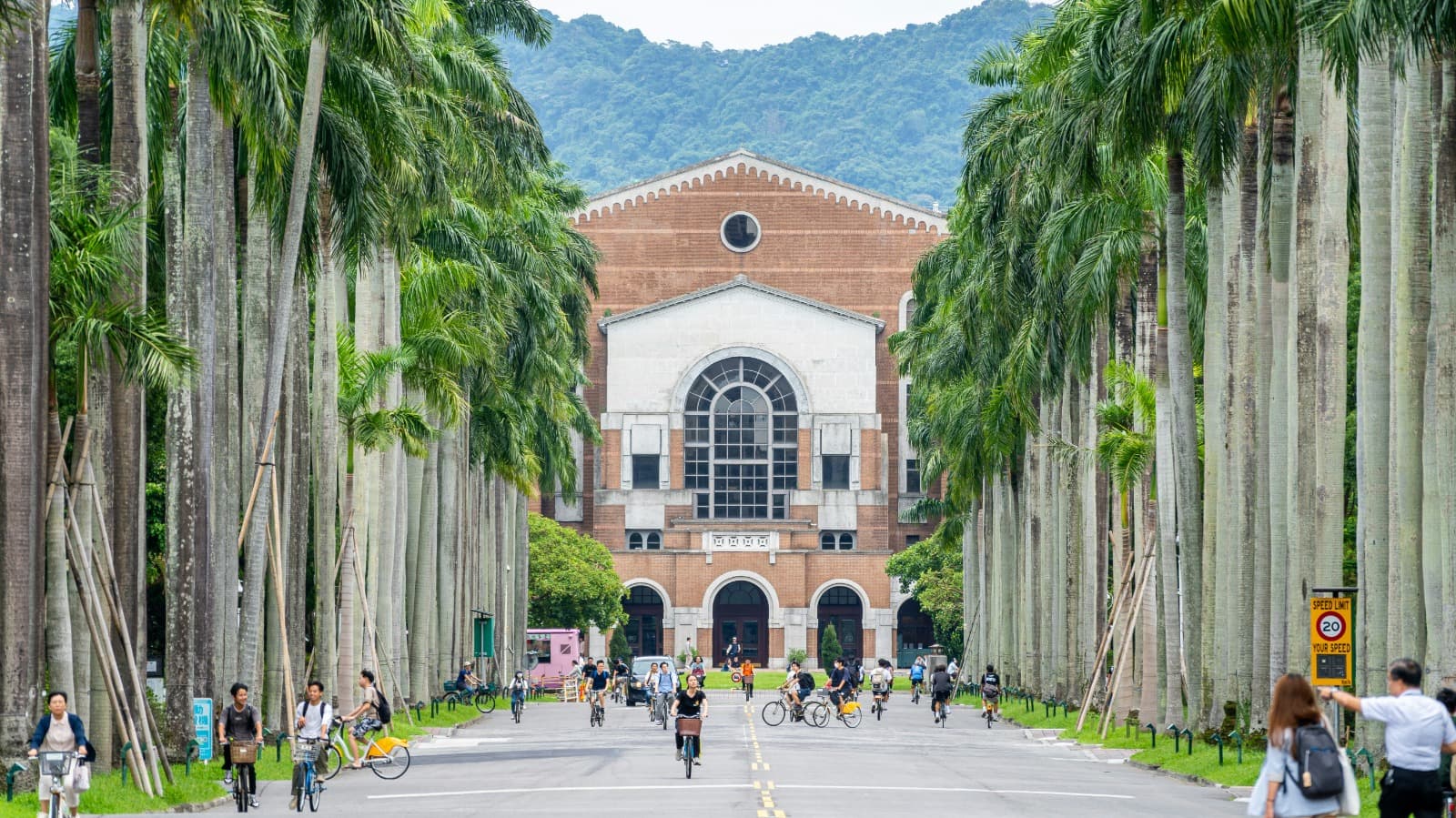
On top of that, I really enjoy the huge campus with trees and ponds literally everywhere. Taipei’s easy to use public transportation and hectic city life was just as I expected and makes life a lot easier and enjoyable.”
What should students consider that applications don’t ask about?
“Students should consider whether they can adapt and sustain the level of academic rigours and continuity NTU expects. It can be easier to get in for international students compared to local ones and they do not ask you for much when it comes to applying.
Also consider whether your current level of knowledge is enough to study in NTU even if you manage to get in.”
Who do you think would thrive studying somewhere like Taiwan?
“Students who like to feel involved and are looking for a schedule that does not let you fall behind on the syllabus would thrive in NTU. You should be ready for non-stop involvement in presentations and projects and to study regularly for quizzes and midterms. Those who prefer self-studying or to only study a couple of weeks before the finals might not prefer NTU unless they are willing to change their habits for learning.”
What do you wish you had known before arriving?
“I wish I had known that NTU is packed with opportunities for networking and getting to know successful people who are dying to share their experiences with you and tons of help to improve your academic abilities. I missed a couple of speeches from Nobel laureates who came to our campus, missed opportunities to meet masters and phd students giving academic advice and only just learnt that you can book private sessions with teaching assistants and tutors that are hired by NTU.
You can even ask for help with your CV, research paper, applications and motivation letters from the writing center for free, throughout the entire semester.”
What advice would you give to students interested in studying in Taiwan or Hong Kong?
“Academic pressure is real, prepare yourself to take each and every class seriously. Both Taiwan and Hong Kong will push you hard. Although expectations and classroom environment can differ according to which university you choose to study. More importantly, get ready for amazing food and to eat rice every day. Also sure to eat a lot of bread and cheese before you leave!”
As we wrap up, I want to remind my dear readers that as these episodes continue, you will see just how subjective the international student experience truly is. There are countless paths one can take, and more often than not, you won’t know if you’ve made the “perfect” choice until later. Everyone faces doubt, but ignoring it gets us nowhere. Instead, we must learn to embrace our choices and their outcomes.
In Begum’s case, I witnessed people doubting her decisions in real time. She could have easily let it get to her, but she held a strong vision of what she wanted and tackled each obstacle one by one.
See you next time, get excited for our next guests, who will be joining us from a much colder climate.
Ayşe Su Özuğurlu